

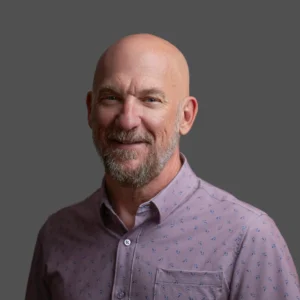
Open seminar with Dr Scott Keith, Executive Director of 1517 and Adjunct Professor of Theology at Concordia University, Irvine.
”What does it mean, today, to be a confessional Lutheran Church?”
När: Torsdag 26 mars, 13.15-16.30.
Plats: Johannelunds Teologiska Högskola, Övre salen
Arr: Johannelund i samarbete med EFS, Re:formera och 1517.
And what do we mean when, at ordination, we vow to preach the Word of God purely and clearly, as it is given to us in Holy Scripture and as it is borne witness to in the Confessions of our Church, and to administer the Sacraments rightly?
These questions become especially urgent in a time when many churches reshape their teaching and practice in response to cultural pressure, often justifying theological change by appealing to adaptation, relevance, or an appeal to Martin Luther as a “reformer” who allegedly broke with the Church’s faith and tradition. Such claims cannot be sustained historically or confessionally. Luther did not seek to create a new church, nor did the Lutheran Confessions present themselves as innovations. On the contrary, they explicitly claim continuity with the catholic faith, asserting that nothing has been taught “that is contrary to the Scriptures or the Church catholic” (Augsburg Confession, Preface; cf. CA XXI).
To remain confessional, therefore, is not to resist reform, but to resist deformation of the Gospel. The Lutheran Confessions are not a flexible starting point for theological experimentation, nor a historical memory to be selectively invoked. They are a binding and public witness to the Gospel, setting forth how the Church rightly teaches, preaches, and administers the means of grace. Where the Confessions are treated as optional, the Church’s proclamation becomes unclear, and the distinction between Law and Gospel is obscured.
This seminar addresses the vocation and responsibility of the ordained ministry within a church that confesses the Augsburg Confession—not as a historical artifact, but as a living and ecclesial norm for preaching, teaching, and pastoral practice. A confessional Lutheran church does not derive its identity from cultural alignment or ecclesial innovation, but from fidelity to Christ as He gives Himself in Word and Sacrament.
We will therefore reflect on the calling and possibility of a future confessional Lutheran folk church: a church that is evangelical and catholic, rooted in the confession of Christ, committed to clear and faithful proclamation, serving the people entrusted to her, and remaining church not by accommodation to the spirit of the age, but by confession of the faith once delivered.
Confession, proclamation, people, and church are not competing realities, but belong together where Christ is preached purely, sinners are justified by grace alone, and the Church lives from the Word and the Sacraments entrusted to her.
Dr. Scott Keith is Executive Director of 1517 and Adjunct Professor of Theology at Concordia University, Irvine. He earned his doctorate from Foundation House, Oxford, through the Graduate Theological Foundation, studying under Dr. James A. Nestingen. His doctoral research focused on the doctrine of good works in the theology of Philip Melanchthon.
Dr. Keith is a leading authority on Melanchthon, particularly his relationship with Martin Luther and his enduring influence on Lutheran theology, the Loci Communes, and Christian education. He is co-host of The Thinking Fellows and Tough Texts podcasts, a contributor at 1517, and the author of several books.